According to the data, the outlook for utility-scale solar construction in the United States remains sunny.
- Nearly 70 GW of new solar generating capacity was scheduled to come online during 2026 and 2027, according to EIA’s January 2026 forecast.
- 46% projected increase in utility-scale solar generation, from 290 billion kWh in 2025 to 424 billion kWh in 2027.
- US utility-scale solar installations grew 61% year over year in Q2 2026.
- Texas, Arizona, California, and Michigan account for 57% of planned 2026 utility-scale solar capacity additions.
- These numbers point to continued activity and strong momentum in utility-scale solar, which means that contractors should plan to take advantage of the opportunity.
Different Sites Require Different Foundation Solutions
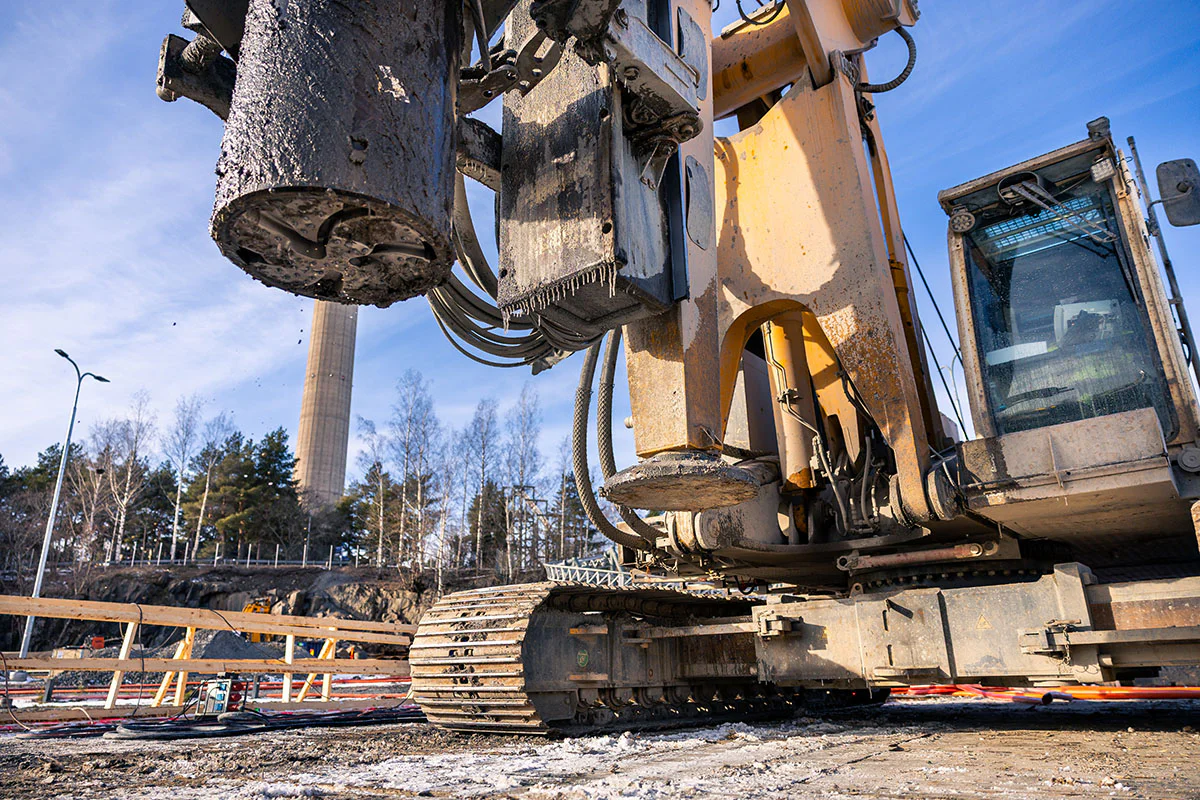
For contractors, that opportunity takes shape at ground level. Utility-scale solar sites can cover hundreds of acres, with foundation installation repeated across rows of panels. Depending on the geology and foundation design, the required groundworks can involve driving piles, pre-drilling through rock, or installing ground screws. Contractors able to carry out these tasks can broaden the services they offer when bidding for solar installation work.
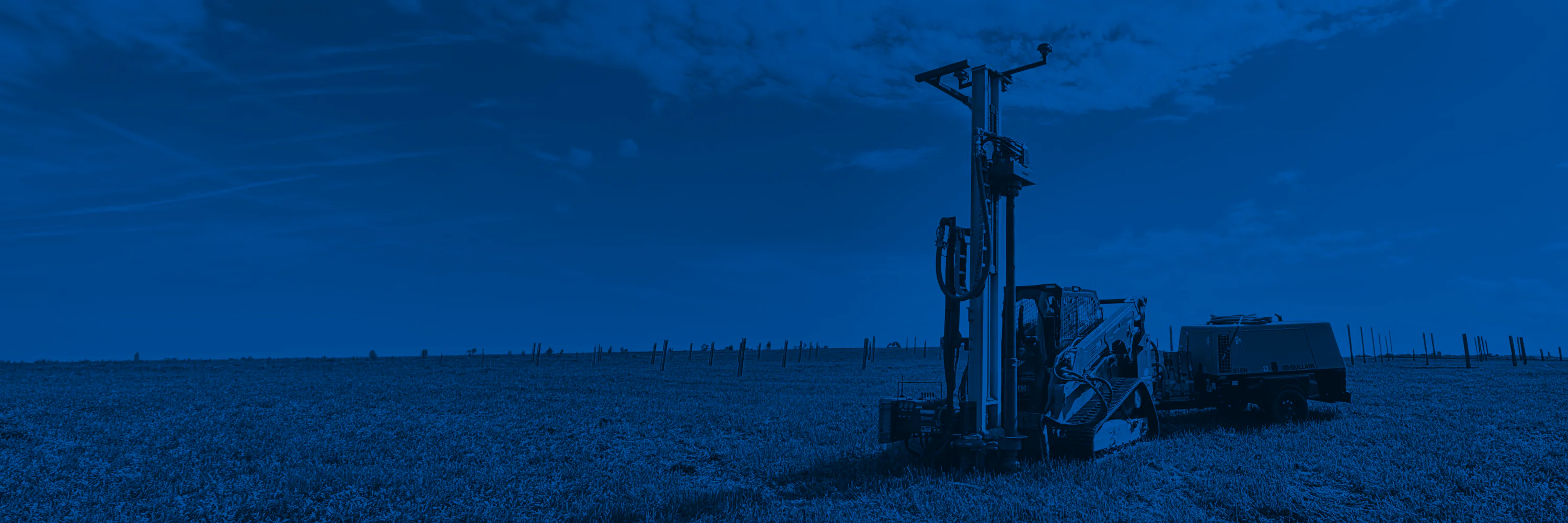
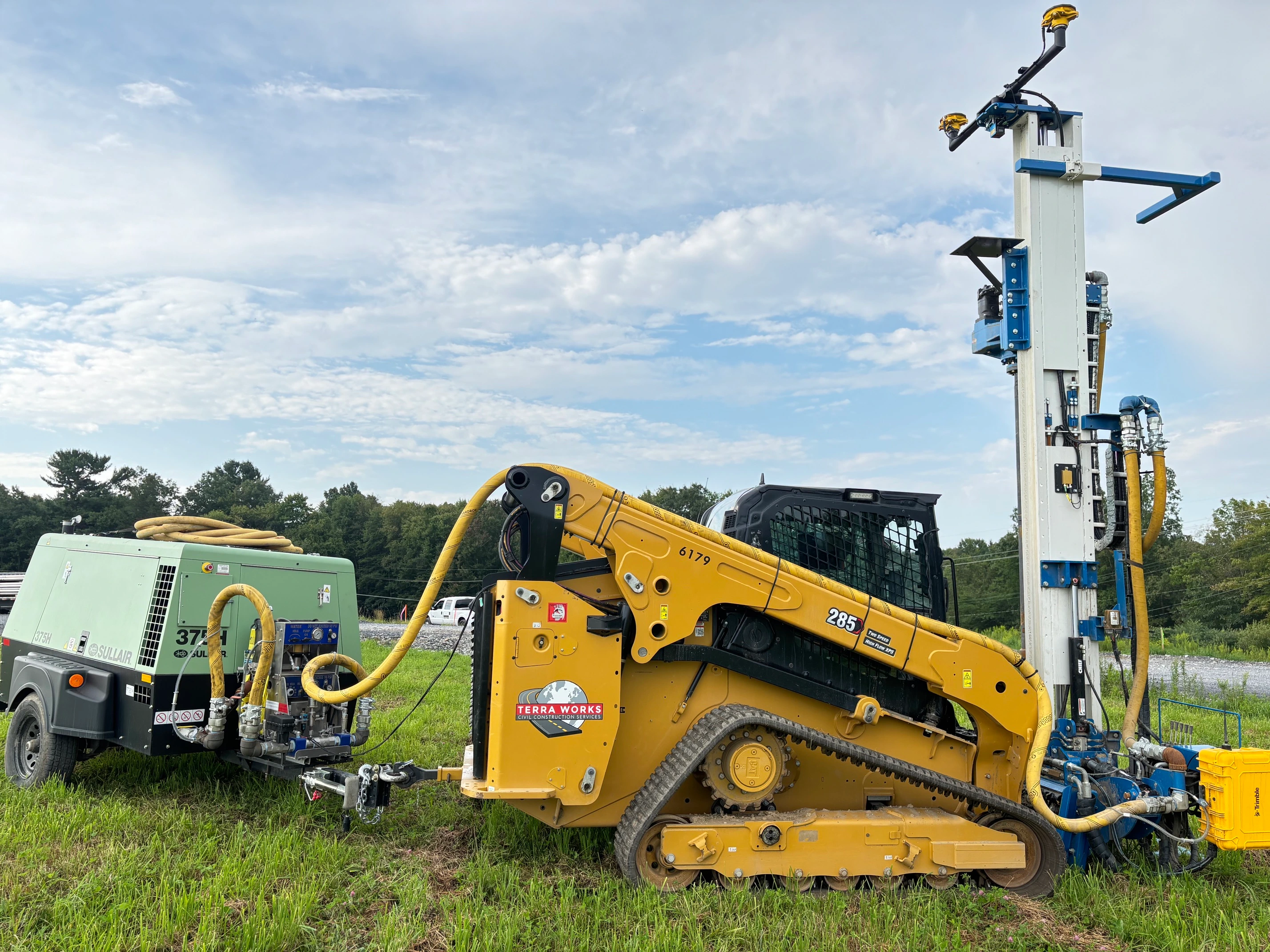
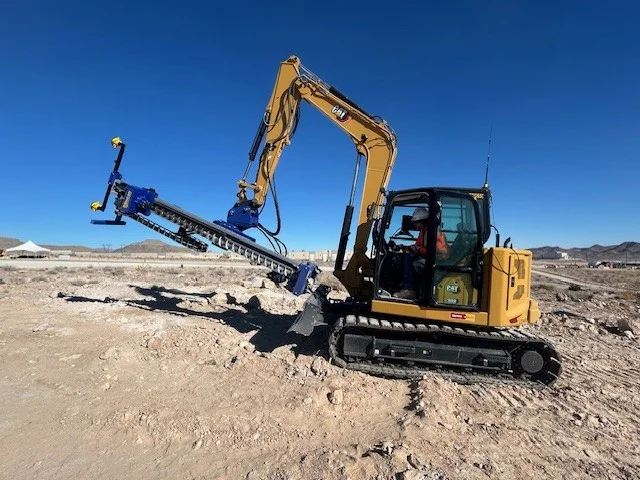
Mincon’s drill mast integrations offer a practical way to add those capabilities to an existing fleet. By using a suitable mast integration with a compatible excavator or skid steer, contractors can put equipment they already own to work on solar foundations, without purchasing dedicated rigs.
Ultimately, ground conditions determine the best approach.
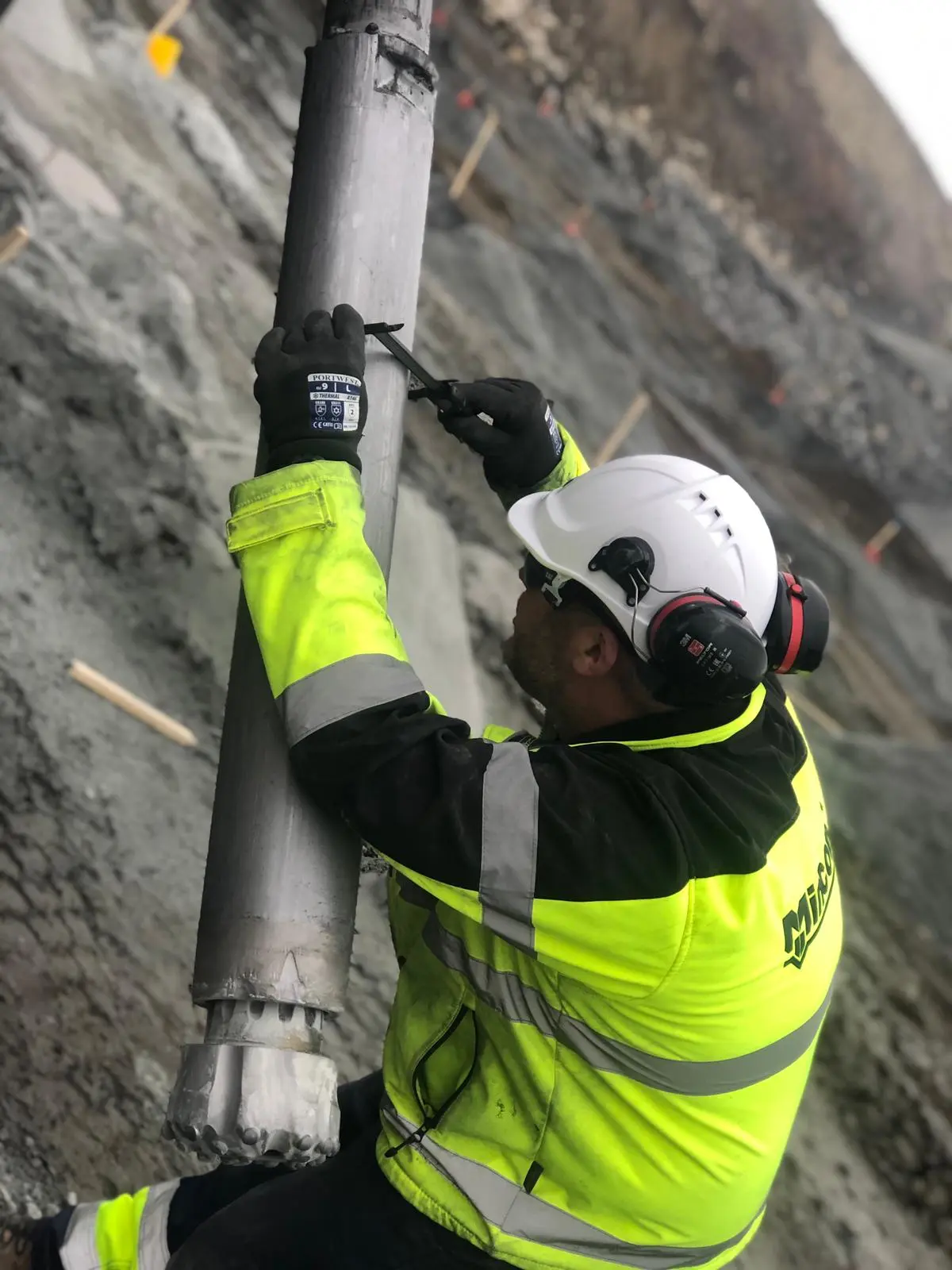
Refusal layers, cobbles and boulders, hardpan, weathered rock, and other difficult formations each present challenges that can prevent driven piles or ground screws from reaching their required depth. When the ground has its say, it’s vital to have versatile tooling that can transform a costly project delay into a blip on the radar.
Mincon’s M-series rotary drill masts draw on our extensive rock drilling experience to offer a turnkey solution for pre-drilling and rock drilling, helping drillers tackle ground that stops piles. Suitable configurations can also install ground screws to support the solar panel mounting structure. And where the foundation design and ground conditions call for driven piles, Mincon’s M2-PD masts provide pile-driving capability in the same package as their rotary drill mast stablemates.
For contractors working across large utility-scale sites with often unpredictable geology, having the ability to seamlessly switch tooling allows them to quickly adapt to changing ground conditions and remain on time and on budget.
Join Mincon at RE+ Las Vegas, 17–19 November 2026, to find out how our next-generation drill mast integrations can help you conquer all ground conditions at your next utility-scale solar installation.
Next in the series: What happens when the ground gets a vote?